Guide
How to Price Creator Sponsorships and Newsletter Ads
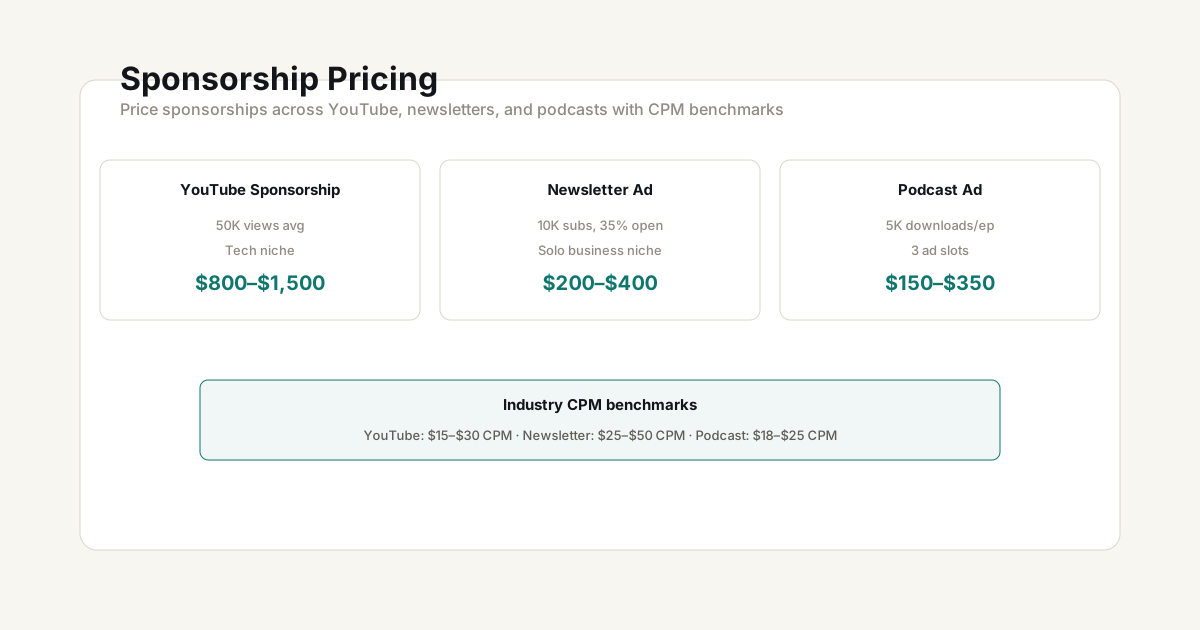
Sponsorship pricing is one of the most confusing parts of being a creator. Charge too little and you leave money on the table. Charge too much and brands walk. Here’s a structured approach to finding the right range.
The CPM baseline
Most sponsorship pricing starts with CPM (cost per thousand impressions or views). While the exact rate depends on your niche and platform, here are typical ranges:
| Platform | Typical CPM range |
|---|---|
| YouTube | $15–$40 per 1,000 views |
| Podcast | $20–$40 per 1,000 downloads |
| Newsletter | $10–$30 per 1,000 subscribers |
| TikTok/Reels | $5–$15 per 1,000 views |
These are starting points, not fixed rates. Your actual price depends on engagement, niche, and deliverable type.
Adjusting for engagement
A channel with 100,000 subscribers that gets 5,000 views is worth less than a channel with 20,000 subscribers that gets 15,000 views. Always use actual views or downloads, not follower count, as your baseline.
- High engagement (10%+ YouTube views-to-subs ratio): Price at the upper end of your CPM range
- Low engagement (under 3%): Drop to the lower end or consider whether the audience is still valuable for brand awareness
Different deliverables, different prices
Sponsorships come in different formats, each commanding different rates:
- Pre-roll / mention — 30–60 second shoutout: 70–80% of full integration rate
- Dedicated segment — 2–5 minute deep dive: full rate
- Full video / episode sponsorship — Entire content piece sponsored: 150–200% of standard rate
- Social media add-on — Instagram/Tweet cross-post: add 20–30%
Newsletter-specific pricing
Newsletter sponsorship pricing follows a different logic because impressions are guaranteed (every send reaches an inbox):
- Price per send = (subscribers × open rate × CPM) ÷ 1,000
- A $25 CPM on a 10K-subscriber newsletter with 40% open rate = $100 per send
Use the Creator Sponsorship Rate Calculator for YouTube and podcast rates, and the Newsletter Sponsorship Pricing Calculator for email rates.
Building a media kit that gets better rates
A strong media kit can increase your rates by 20–50%. Include:
- Month-over-month growth trends (not just raw numbers)
- Audience demographics that match sponsor categories
- Past sponsor case studies with performance data
- Testimonials from previous brand partners
The better you can demonstrate ROI to a sponsor, the higher your rate.
Common mistakes
- Pricing by follower count — Follower counts are vanity; views and engagement are what matter
- Not tiering your offers — Offer a bronze/silver/gold package at different price points
- Ignoring seasonality — Q4 rates can be 30–50% higher than Q1
- Underpricing exclusivity — If a brand wants category exclusivity, charge 15–25% more
Use the Lead Magnet Value Calculator to see how a free download or lead magnet can grow your audience and justify higher sponsorship rates.
Frequently Asked Questions
What CPM should I charge as a new creator?
For newsletters under 10K subscribers, $20-30 CPM is a reasonable starting point. For YouTube sponsorships, $15-25 CPM for integrated reads. As your audience grows and you can demonstrate engagement, push toward $40-60 CPM. Niche audiences in finance, tech, or B2B command higher rates.
How do I negotiate with brands who want a discount?
Never discount your rate — offer added value instead: an extra social media mention, a longer placement period, or inclusion in a follow-up email. This preserves your rate card while giving brands more for their budget. If they insist on a lower rate, reduce the deliverables, not the price.
Should I charge per email or per campaign?
Per-campaign flat fees work best for dedicated sends. CPM-based pricing works better for newsletter ad placements. For a mixed approach, quote a flat fee for the primary placement and offer add-on social promotion. This gives brands predictable costs while you capture more value.
Planning tools — Use the calculators and frameworks on this site to model scenarios and compare assumptions. Results are estimates, not financial, legal, or tax advice.